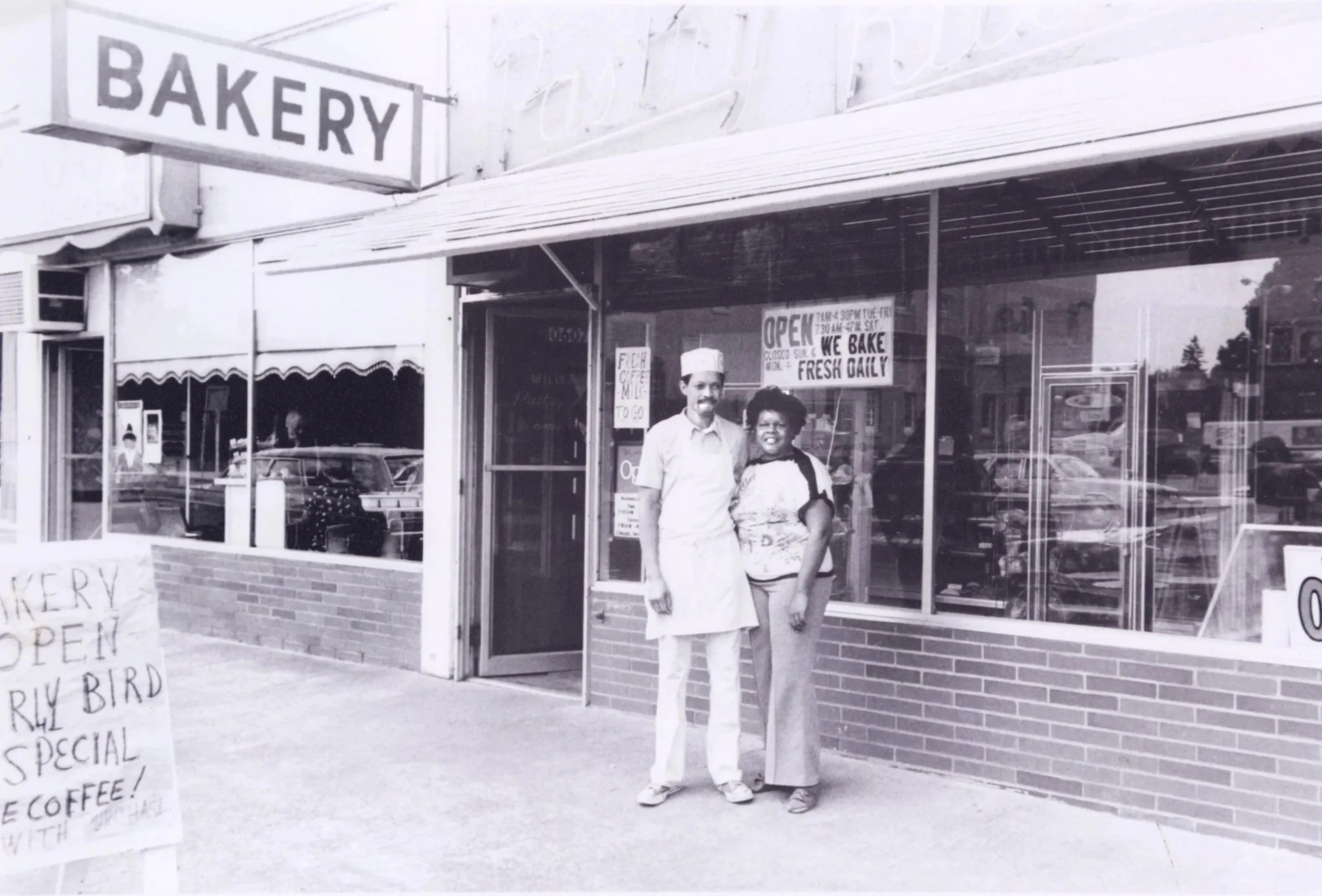
Dorothy and Hurtis Hadley standing outside of their bakery, circa 1980 Image courtesy of Milwaukie Historical Society (MHS) Collection 2026.30.1
It was a sunny spring day…
when Dorothy Jean Bishop and Hurtis Mixon Hadley Sr. first opened the doors of the Milwaukie Pastry Kitchen to the public. Cases filled with pastries, pies, and other baked goods welcomed customers, and bouquets of colorful flowers gifted from neighboring businesses topped the pastry counters. Re-opening the small Main Street bakery was a momentous occasion for the Hadley family, and as it happened, it was also a historic moment. On April 19, 1977, the Hadley’s became the owners of the first Black-owned business in the city of Milwaukie and the first Black-owned bakery in the state of Oregon.
The lives of Dorothy and Hurtis Hadley are historic. Their history - the story of their lives, struggles, and triumphs must be shared. Too often, the lives and historic contributions of members of marginalized communities are overlooked. This is not something that the Hadleys are strangers to. As children, Dorothy and Hurtis survived the flooding of Vanport, and more recently, they have witnessed the diminishment of Portland’s Black community through decades of gentrification and urban renewal efforts. Because of this, the Hadley’s have spent countless hours of their later years speaking about their historic lives and advocating for their story to be recorded and shared. Their continued efforts have ensured their place in Oregon’s historic record.
This online exhibit collects, organizes, and amplifies the voices and experiences of Dorothy and Hurtis Hadley. The online exhibit curator, S.E. (Sarah) Harris, and the hosting partner, the Milwaukie Historical Society, are eternally grateful for the opportunity to collaborate with the Hadley’s on this historic project.
The Hadley’s and the 2nd Great Migration
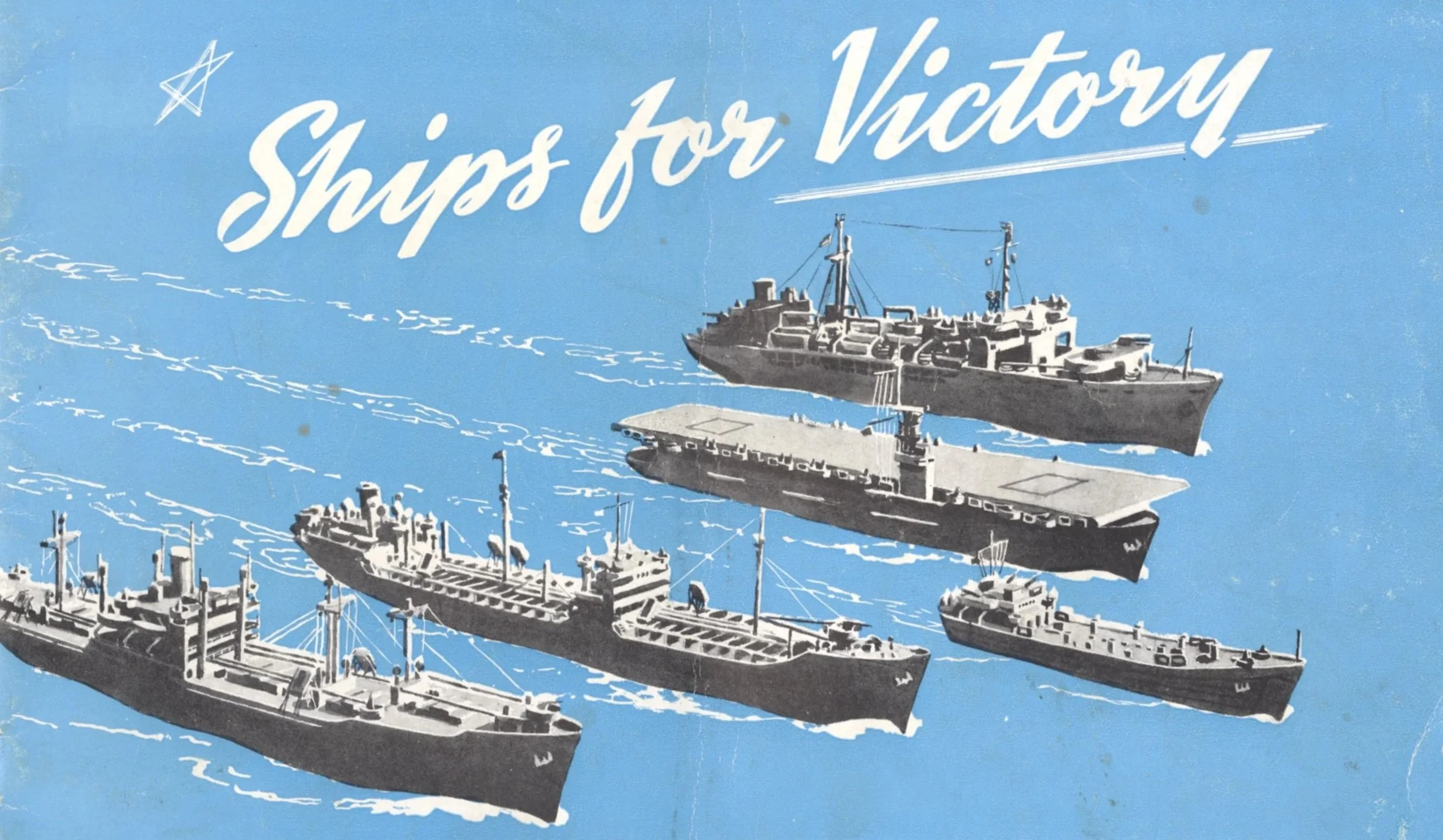
Dorothy was born in Tillar, Arkansas in 1942 and Hurtis was born in Nevada, Arkansas in 1943. At the height of World War II, Dorothy’s father was one of thousands who were recruited to work in one of Henry Kaiser’s shipyards along the Columbia River. She and her family relocated and settled in Vanport, a segregated temporary housing development built for the influx of Black, Chinese, and other working-class Kaiser employees and their families.
At the young age of two, Hurtis moved with his family from Arkansas to their new home in Vanport so that his stepfather could work on a shipyard. By this time, Vanport had become the second largest city in Oregon and the largest housing project in the United States.
After WWII concluded and the wartime shipbuilding industry dropped off, some families left Vanport, but thousands of others, like Dorothy and Hurtis’s, remained in their homes, as they were still restricted from buying homes or living in Portland’s all-White neighborhoods.
On May 30th, 1948, after days of historic rainfall, the dikes that held the Columbia River ruptured, flooding the city of Vanport. No more than 24 hours after officials informed residents that they were safe, the radio would air an emergency broadcast denoting the imminent failure of the dam. In the OPB documentary, The Flooding of Vanport, Hurtis and Dorothy recall how this day changed their lives. Displaced overnight alongside 18,500 other residents of Vanport, both of their families were affected by the aftermath of the flood.
Immediately after the flooding, both Dorothy and Hurtis’ families moved into nearby temporary housing. Around 1950, Hurtis and his family moved to the lower Albina district in NE Portland, and Dorothy and her family settled in Columbia Villa in North Portland. As children, they attended Portland's integrated public schools, and as they grew older, they experienced racism in different ways. During a recent oral history interview, Hurtis recalled that during his senior year, his golf instructor refused to allow him to be photographed for the yearbook with the rest of the all-white team, despite being photographed and listed with his other affiliations: the marching band, dance band, and basketball team.
Ships for Victory book, produced to highlight the work being done at Oregon’s shipyards, Image courtesy of MHS Collection, 2024.999.1252
Becoming ‘the Hadleys’
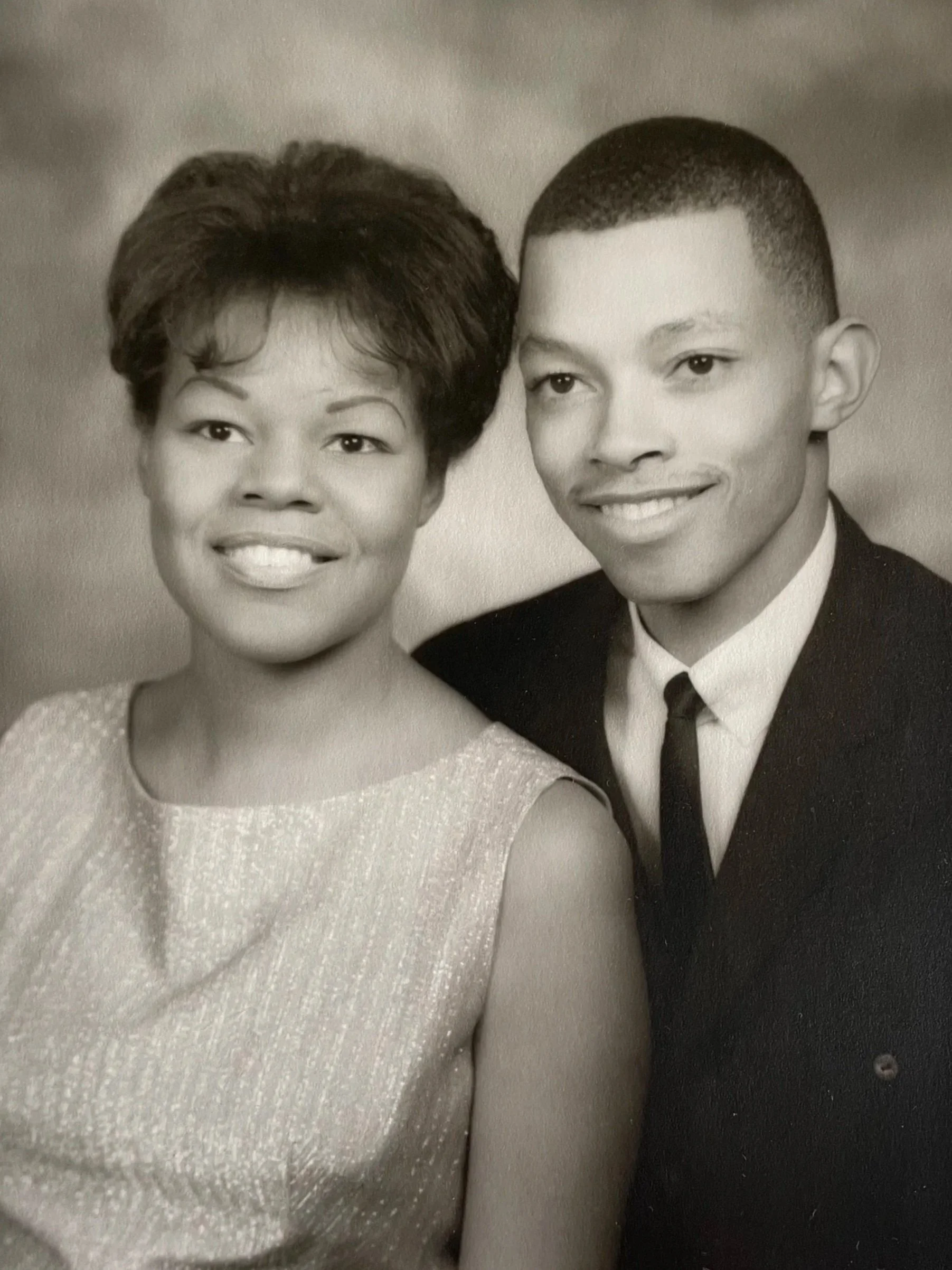
Dorothy and Hurtis Hadley as newlyweds circa 1962, Image courtesy of Hadley family
In high school, Hurtis began to work for local radio DJ Fitzgerald Beaver. After graduating, Hurtis became manager for his own band, the Fabulous Majestics, playing saxophone for songs like Dream On and Somethin’ Else. He also performed with the local group, The Monarchs.
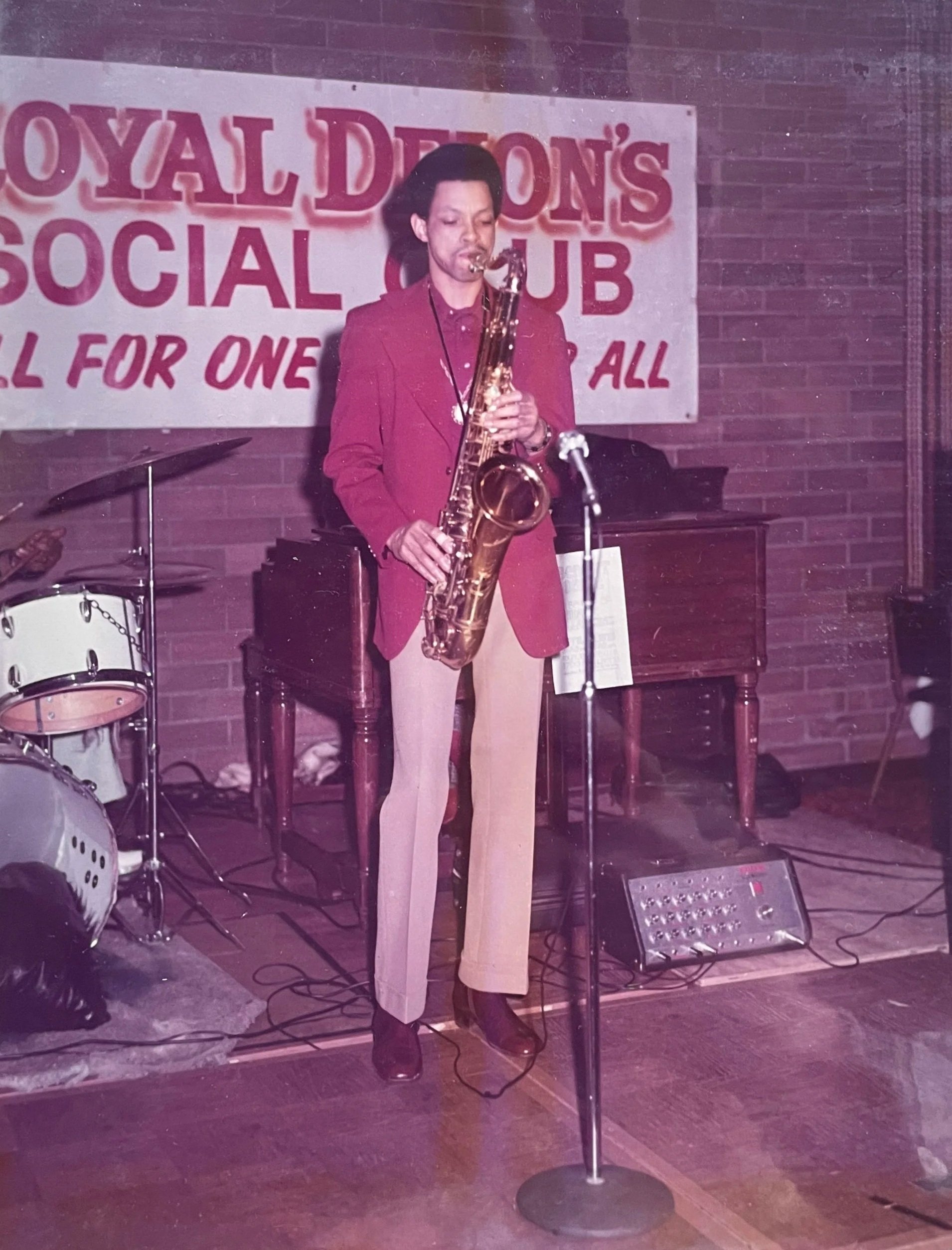
Hurtis performing with the Fabulous Majestics in the 1960s, Image courtesy of Hadley family
The Fabulous Majestics would eventually join The Larks on one of their West Coast tours. In the early 1960s, at one of their Portland-area shows, Hurtis and Dorothy were first introduced. The couple fell in love and dated until they were married the day after Valentine's day in 1962. They started their family soon thereafter.
Seeking careers in Rose-City
In June of 1963, Dorothy graduated from the Hollywood School of Beauty in Portland. Her education had prepared her to work in salons with white clientele, but when she went to apply for jobs, she quickly found that many salons in Portland would only hire a Black woman to wash or sweep hair - not as a beautician.
So, Dorothy took her education and pivoted to become a product demonstrator for special events, and eventually became a full-time domestic engineer after giving birth to her and Hurtis’ first child.
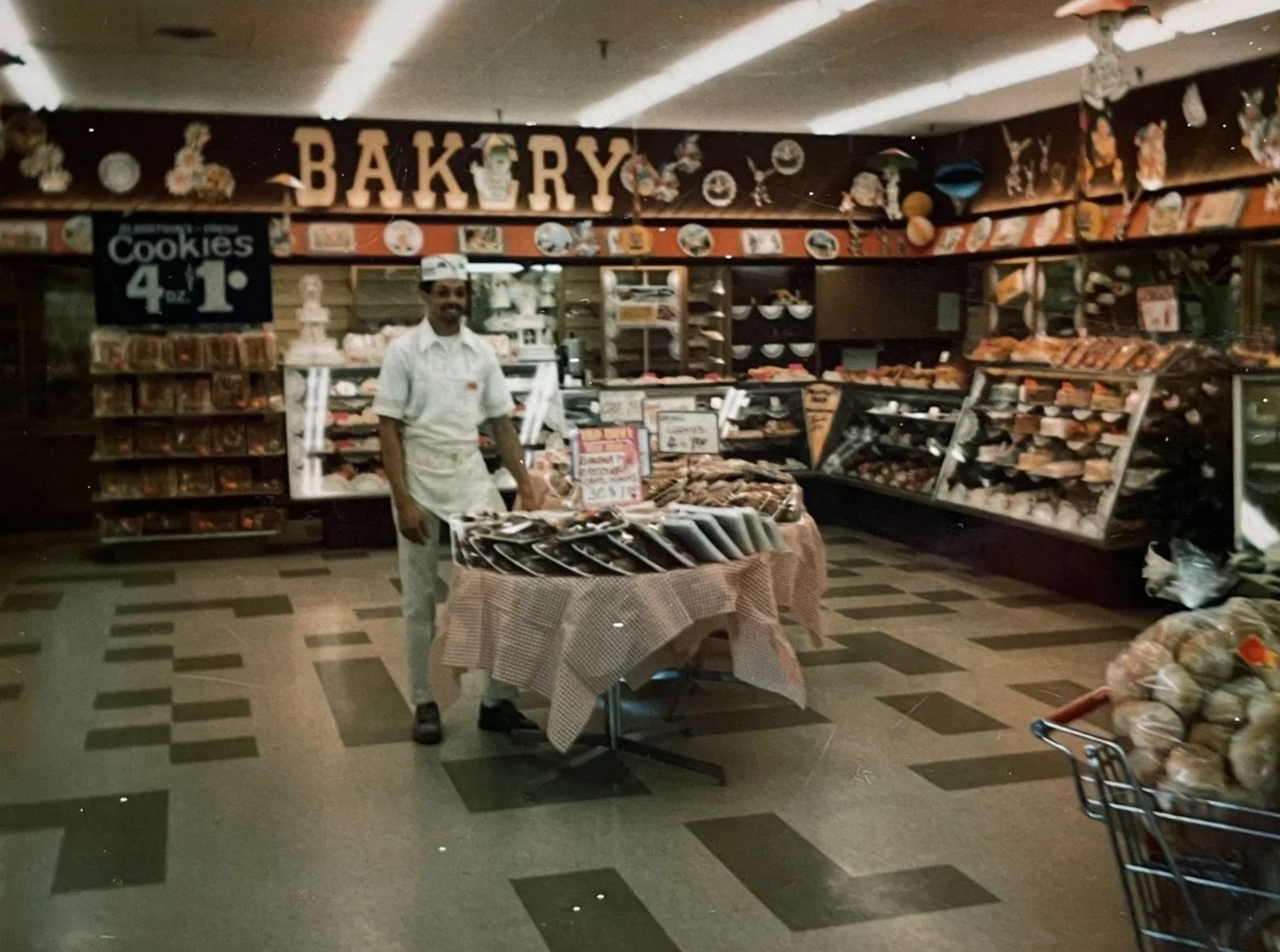
“Baking” history in Oregon
Hurtis standing in the bakery at Albertsons, Image courtesy of Hadley family
Note: almost all of the items for sale in the grocery store’s bakery were behind the counter. There was almost no self-service in the bakery in the 1960s.
So Hurtis resigned from his position as bakery manager. He accepted a new position at a local, independent bakery in Hillsboro, Oregon. It was during this time that Hurtis heard from a salesman from a local bakery supplies company that the previous owners of the Milwaukie Pastry Kitchen were looking for a qualified baker to purchase and operate the business.
In 1962, Hurtis took his first job in the food service industry at the Aladdin Restaurant in the Meier & Frank department store at the new Lloyd Center shopping mall. Here, he learned the fundamentals of baking, and would occasionally help out the pantry manager, who told him that Kienow’s Bohemian bakery was hiring. Hurtis moved to the Bohemian bakery, and when he was not busy baking their famous Banana Cream Cake, he attended supermarket school, which provided him with specialized retail baking knowledge.
In 1965, the same year as the birth of his first child, Hurtis’s experience caught the attention of Henry Gibheart, who was the head bakery merchandiser for Albertson’s grocery. Gibheart convinced Hurtis to be hired on as a retail baker for Albertsons, and pushed for him to attend a three-year apprenticeship program through Portland Community College. With the support of Dorothy, Hurtis began working as a full-time apprentice through Local 114, and attended school two nights a week. He completed his journeymanship two years later - one year earlier than others, thanks to his prior bakery experience.
In 1967, Hurtis Hadley became the first Black man in Oregon to be certified as a journeyman baker. In 1970, Hurtis became the first Black bakery manager of a grocery store in Oregon, and later, he became the first Black bakery trainer in Oregon for Albertsons . By 1976, Hurtis had been employed by Albertsons for over ten years, and he was a top candidate to become the next Head Bakery Merchandiser for the chain in the state of Oregon. But Hurtis was eventually told that he would not be able to be considered for the promotion because some Oregonians would not accept a Black man in that position of authority.
The Milwaukie Pastry Kitchen in 1977
For decades, the center of Milwaukie’s commerce was off Highway 99 (now McLoughlin Boulevard), as this was the major artery that connected Portland to Salem and every small town in between. Residents and visitors would purchase gasoline on the west side of the road, and shoppers would purchase their weekly groceries from each of the specialty grocers and general stores on the east side of the road, on Milwaukie’s Main Street. Shoppers purchased medical supplies from Perry’s Pharmacy, holiday roasts from Ralph Cooper’s Meat Market, canned goods and frozen meals from Safeway, but, in the absence of the Pastry Kitchen, they did not have a bakery from which to purchase fresh bread, pies, pastries, or specialty cakes. The Hadley’s were being asked to come and fill a need - but the need belonged to a community they weren’t already members of.
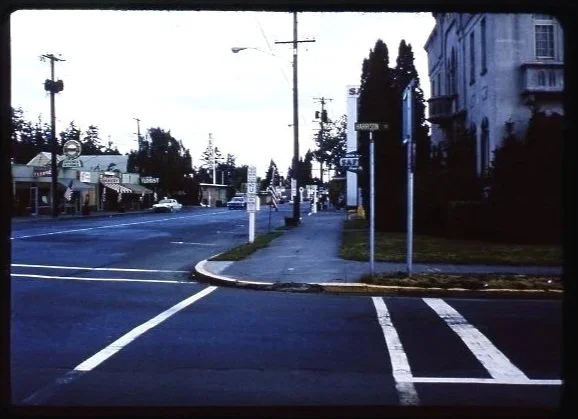
Main Street Milwaukie from mid-intersection on Monroe. Image courtesy of Milwaukie Historical Society Collection, 2024.999.1253
When the idea of taking over the bakery was first presented to the couple, they knew almost nothing about Milwaukie. The Hadley’s lived near the Albina district of NE Portland, which had become the main epicenter for Portland’s Black community post-Vanport. But, unlike most other Black families at the time, the Hadleys lived just outside this district, in a community where bankers had attempted to restrict Black families from obtaining mortgages and owning their homes. When the Hadley’s bought their house in NE Portland in 1969, it was in a neighborhood where racist financial institutions would not extend a mortgage loan to them because they were Black. But the man who built the house (the landlord of Hurtis’ mother), wanted them to own it, and he physically took the Hadley’s to the bank to ensure the house title was put in their name. Dorothy and Hurtis raised their three children (Hurtis Mixon Jr., Lori, and Darrin) in this house in NE Portland, and remained in the house while they commuted to Milwaukie.
North on Main Street from Harrison, Image courtesy of Milwaukie Historical Society, Bill Hupp Collection, 2024.999.43
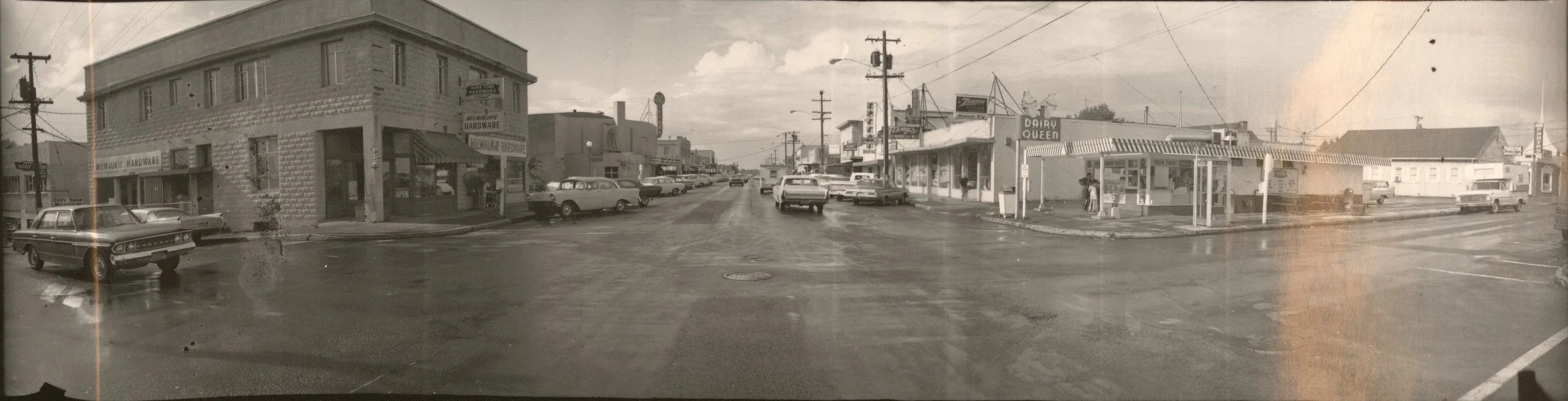
Milwaukie has been home to the Clackamas, Cascades, and Multnomah bands of the Chinook since time immemorial. For centuries, generations of the same family members lived in wooden plank houses along the Willamette River, near the confluence of Kellogg and Johnson creeks. Here, Milwaukie’s Indigenous community cultivated, traded, and lived on the land that would become the center of what contemporary residents refer to as “downtown Milwaukie.” In the 1850s, Lot Whitcomb and other Oregon Trail settlers forcibly removed the land’s Indigenous inhabitants in order to clear the way for colonial settlement. Throughout the 19th century, this land was primarily agricultural land and was a part of Seth Lewelling’s expansive orchard.
Throughout the 20th century, Milwaukie’s residents, neighbors, and visitors stopped to shop on Main Street, where specialty stores provided supplies and groceries, and restaurants supplied hungry shoppers with freshly prepared meals. In the 1930s, after Highway 99E was built by the Civilian Conservation Corps, Milwaukie became a stop along the highway between Portland and Salem. Multiple new businesses opened along Main Street, and one of those businesses was the Milwaukie Pastry Kitchen.
In the 1950s, thanks to housing funding provided by the GI bill, the baby boom, and an increase in automobile culture that allowed people to move further away from where they worked, Milwaukie’s population increased by 180%. Simultaneously, the rise of post-war consumer and leisure culture increased car travel through Milwaukie, and demand for modern shopping conveniences increased tenfold. In the early 1950s, Milwaukie’s first shopping center opened to the public, and soon thereafter, Milwaukie’s Main Street businesses became the go-to destination for shoppers in and around “Dogwood City.”
The pre-Hadley history of the Milwaukie Pastry Kitchen
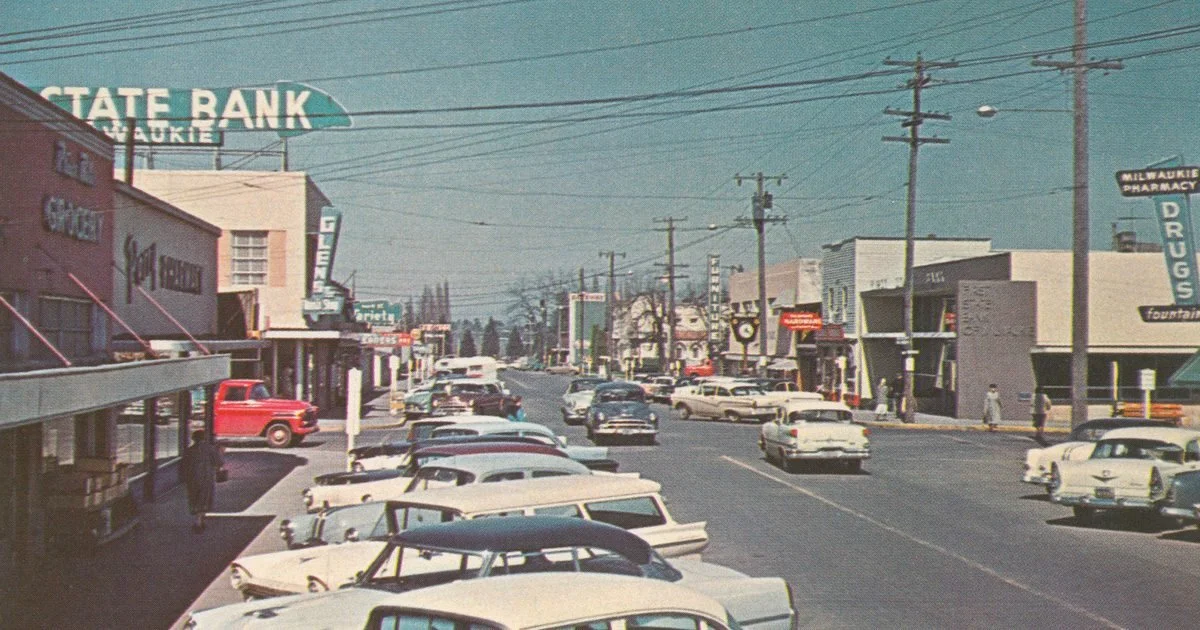
Main Street Milwaukie from mid-intersection on Monroe. Image courtesy of Milwaukie Historical Society Collection, 2024.999.1254
Sometime in the 1960s, Carl Dixon purchased the Milwaukie Pastry Kitchen from its original owners. Around 1975, Carl fell ill and began looking for a new owner to take over his bakery. By this time, Main Street had multiple clothing stores, restaurants, pharmacies and grocery stores, but only one bakery. And while the grocery stores on Main Street did offer baked goods, many of Milwaukie’s residents were accustomed to picking up freshly baked goods at their local bakery.
Milwaukie’s residents had a need, and Dixon was looking for the right baker to take on the task. He eventually found Hurtis Hadley, whose qualifications as a Master Baker made him more than equipped for the position as head baker, and whose previous management experience had prepared him to become a bakery owner. Dorothy’s experience working as a product and demonstration model made her more than qualified to run the bakery’s front of house. So, in 1977, after over a year of closure (and a few weeks of Carl Dixon spreading the good news around town) Dorothy and Hurtis Hadley re-opened the doors to the Milwaukie Pastry Kitchen to the public.
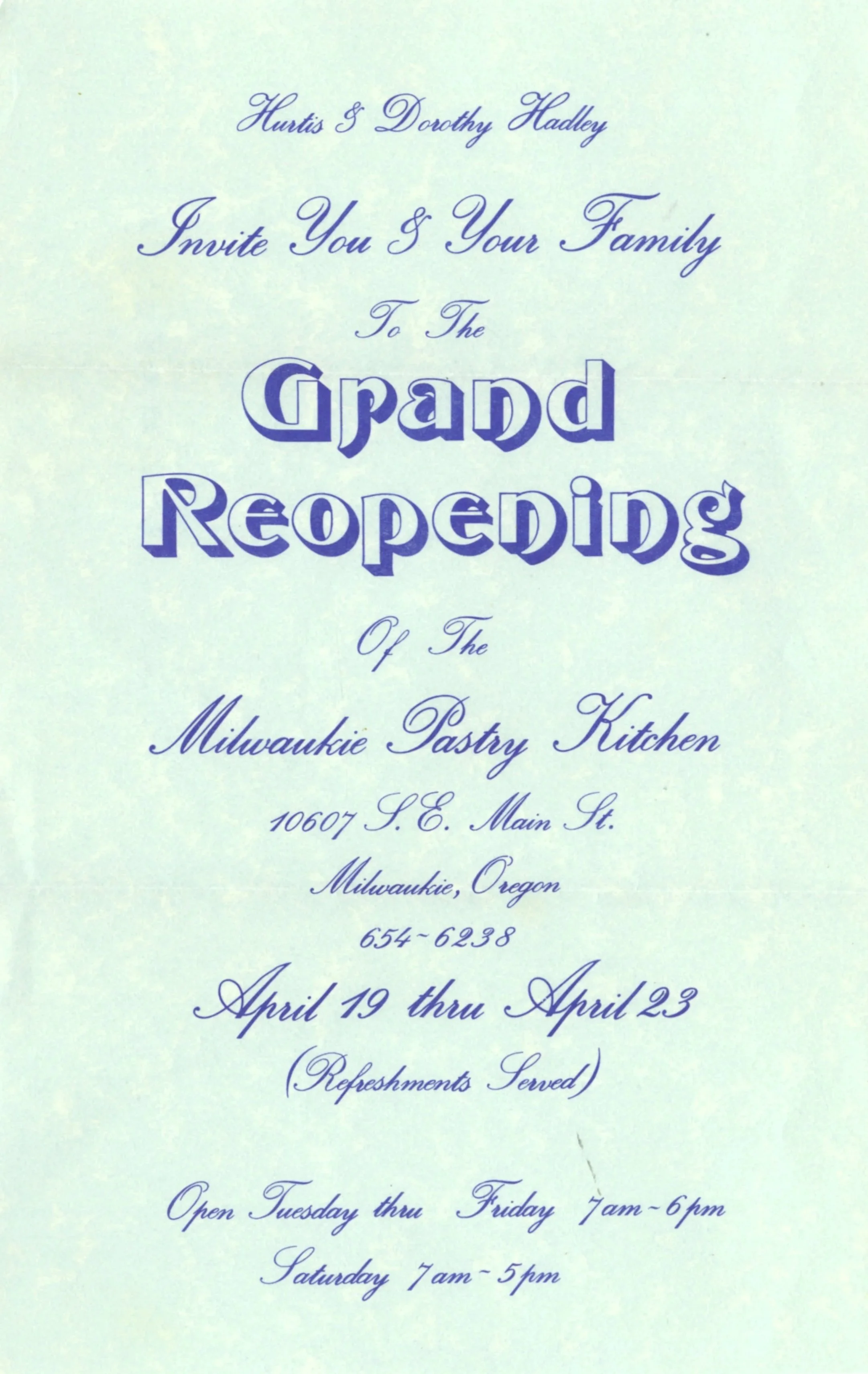
Invitation to the Grand Reopening for Milwaukie Pastry Kitchen, Image courtesy of Hadley family
Opening the Hadley’s Pastry Kitchen
When the Hadley’s took over the bakery, they did not know that they would become the owners of the first Black-owned bakery in the state of Oregon, nor did they know that they would be the owners of the first Black-owned business in Milwaukie. What they did know, however, was that their daily commute would take them into an entirely different community than the one in which they lived.
Of the 17,931 total occupants of Milwaukie reported in the 1980 census, 17,393 were White, and only 72 were Black. This was unlike the Albina neighborhood that the Hadley’s lived near, where the businesses were predominantly patronized by Black customers. Although it did not deter them, the Hadley’s were acutely aware of this upon purchasing the bakery. Despite being outsiders, Dorothy and Hurtis look back at their tenure in Milwaukie fondly. The couple recall the immediate support they received from the community, and how their good times in Milwaukie far outweigh the bad.
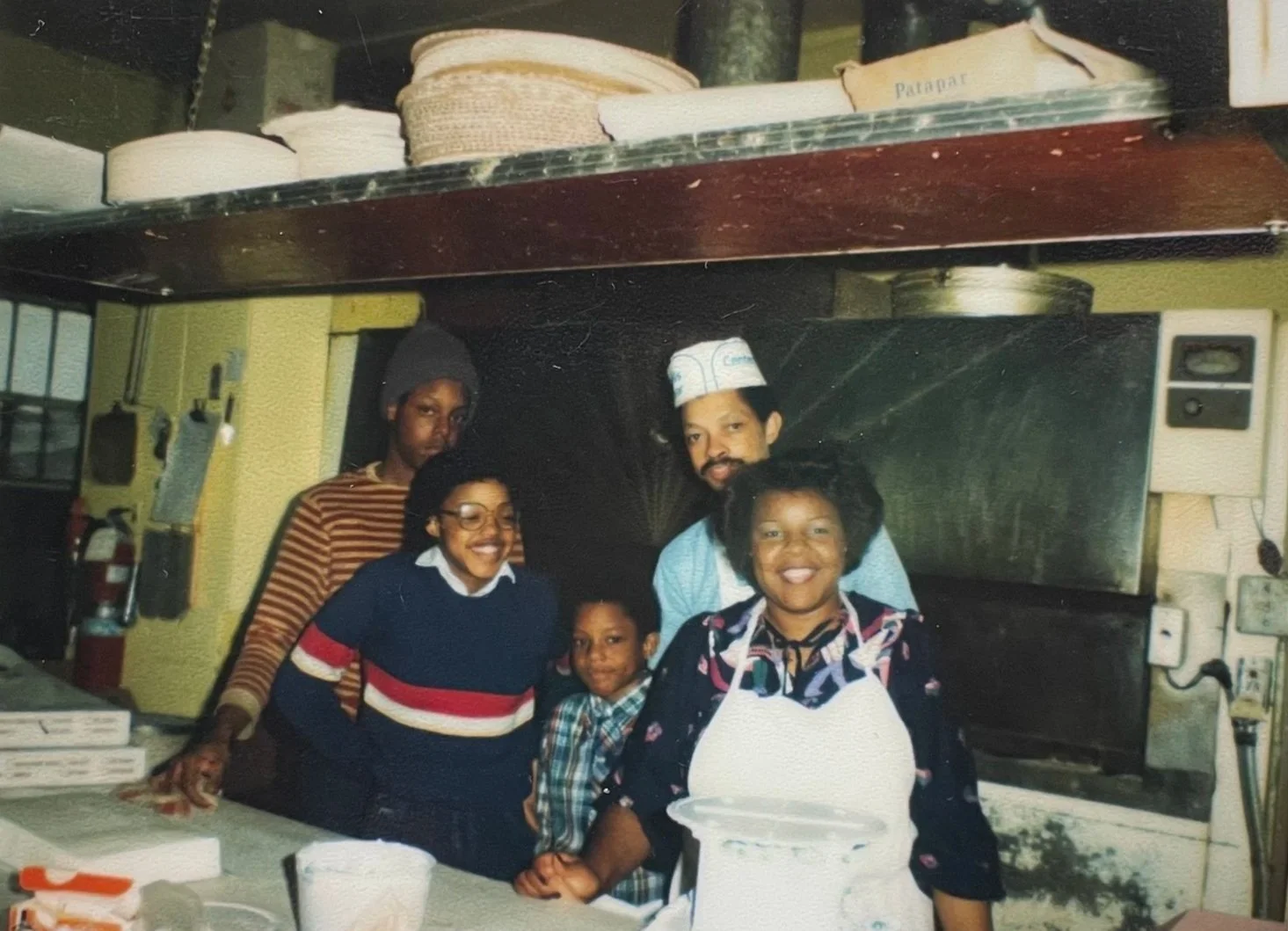
Dorothy, Hurtis, and their three children inside the kitchen at the Milwaukie Pastry Kitchen, Image courtesy of Hadley family
Once the Milwaukie Pastry Kitchen was officially re-opened, Hurtis arrived at the bakery before dawn to bake and decorate cakes. Every morning, he would bake cookies, cakes, breads, muffins, and other baked goods to fill their pastry cases. Hurtis primarily worked behind the scenes, unless he was making deliveries. He worked with the support of a few helpers, though he struggled to find a decorator to help him with his custom cakes. Dorothy always worked in the front of the house, where she would put her years of customer service skills to good use chatting with weekly shoppers, helping customers fill out custom cake orders, and coordinating Cake-on-Wheels deliveries. Hurtis would deliver cakes to any location for a small fee, but he wouldn’t do so casually - when he arrived at his destination, Hurtis would be wearing a fully tailored suit and top hat. It was, undoubtedly, the most stylish cake delivery service in the Pacific Northwest, and perhaps the entire United States.
For a short time period, the couple also owned Boss’s BBQ in NE Portland. Dorothy prepared ribs, beans, and burgers for her customers - and catered for touring musicians when they performed in town. The couple hoped that by bringing baked goods from Milwaukie to NE Portland they could double their business, but the support of Milwaukie far outweighed the support of their customers in NE Portland, so the restaurant was forced to close after a few years in business. The Milwaukie Pastry Kitchen remained open, with the unwavering support of the Milwaukie community.
Acceptance in Milwaukie
Over the eight years that they served as the owners of the Milwaukie Pastry Kitchen, the Hadley’s became important members of their community, and their customer support was overwhelming at times. During certain holidays, Hurtis would work practically around the clock to ensure their shelves were stocked with enough pies, rolls, and pastries to keep hungry customers satisfied.
But the Hadleys had a high demand year-round, and this high-demand was noticed by some of the employees at the Safeway located just across Main Street. Some shoppers would visit the grocery store to pick up most of their shopping list, before heading across the street to the Milwaukie Pastry Kitchen to purchase freshly baked goods - while leaving their cars in the Safeway lot. Safeway hired a security guard to limit the use of the parking lot to active Safeway customers only. The Hadley’s had noticed the new security guard, but they did not have a chance to investigate - as their customers already had. Dorothy recalls that some of their weekly shoppers spoke to the security guards of the Safeway, admonishing them for limiting customer parking, and were ultimately successful at convincing them to suspend the policy.
At another moment of their tenure, two regulars helped support the business through acts of financial support. The couple would stop by the bakery daily to pick up a treat they shared and chat with the Hadley’s, and one day, when the bakery’s oven broke down, they purchased a new oven for the shop. Throughout their tenure in Milwaukie, one fact was clear: the Milwaukie Pastry Kitchen had developed a reputation for some of the best baked goods south of Sellwood, and Milwaukie's residents genuinely appreciated the labor of Dorothy and Hurtis Hadley.
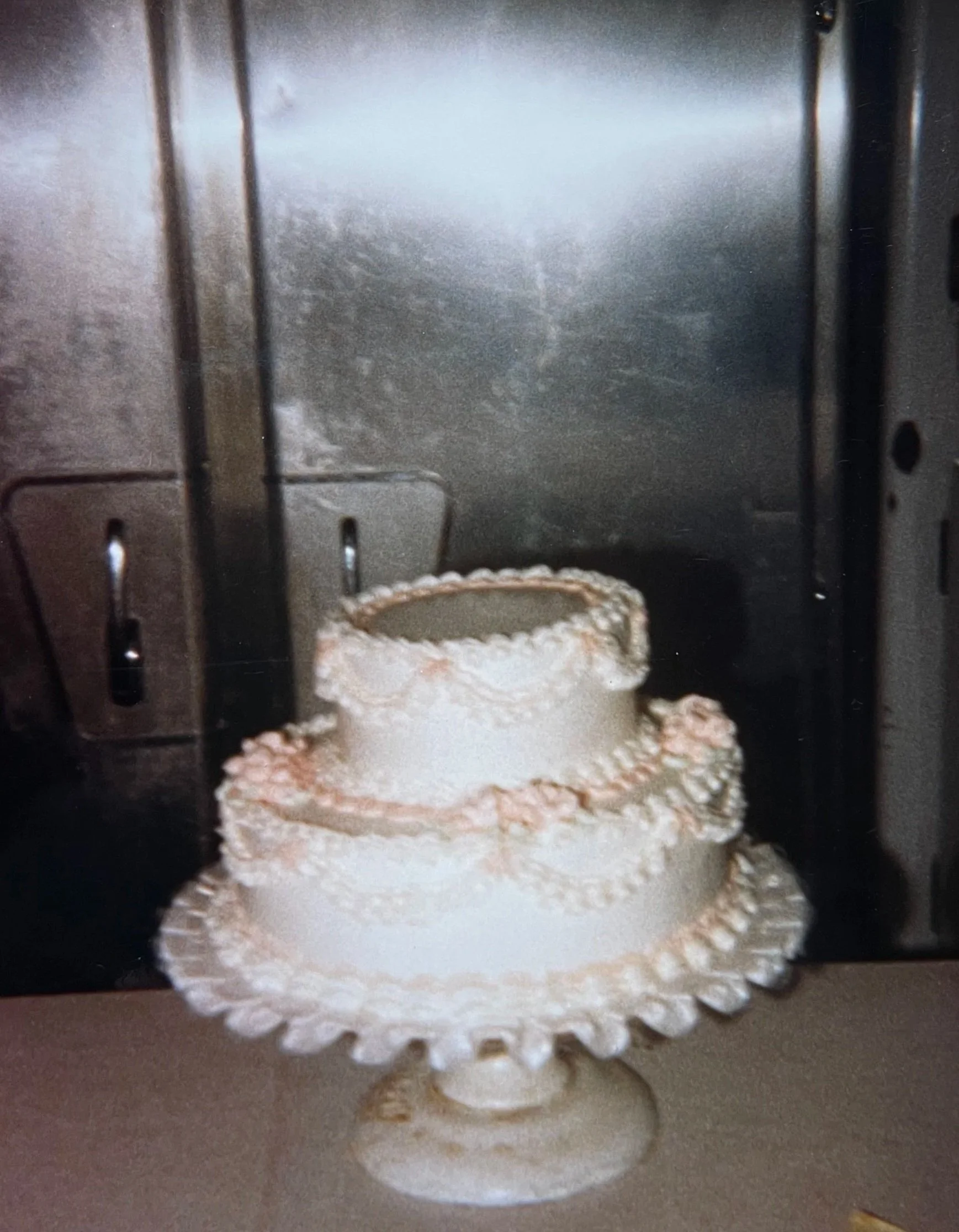
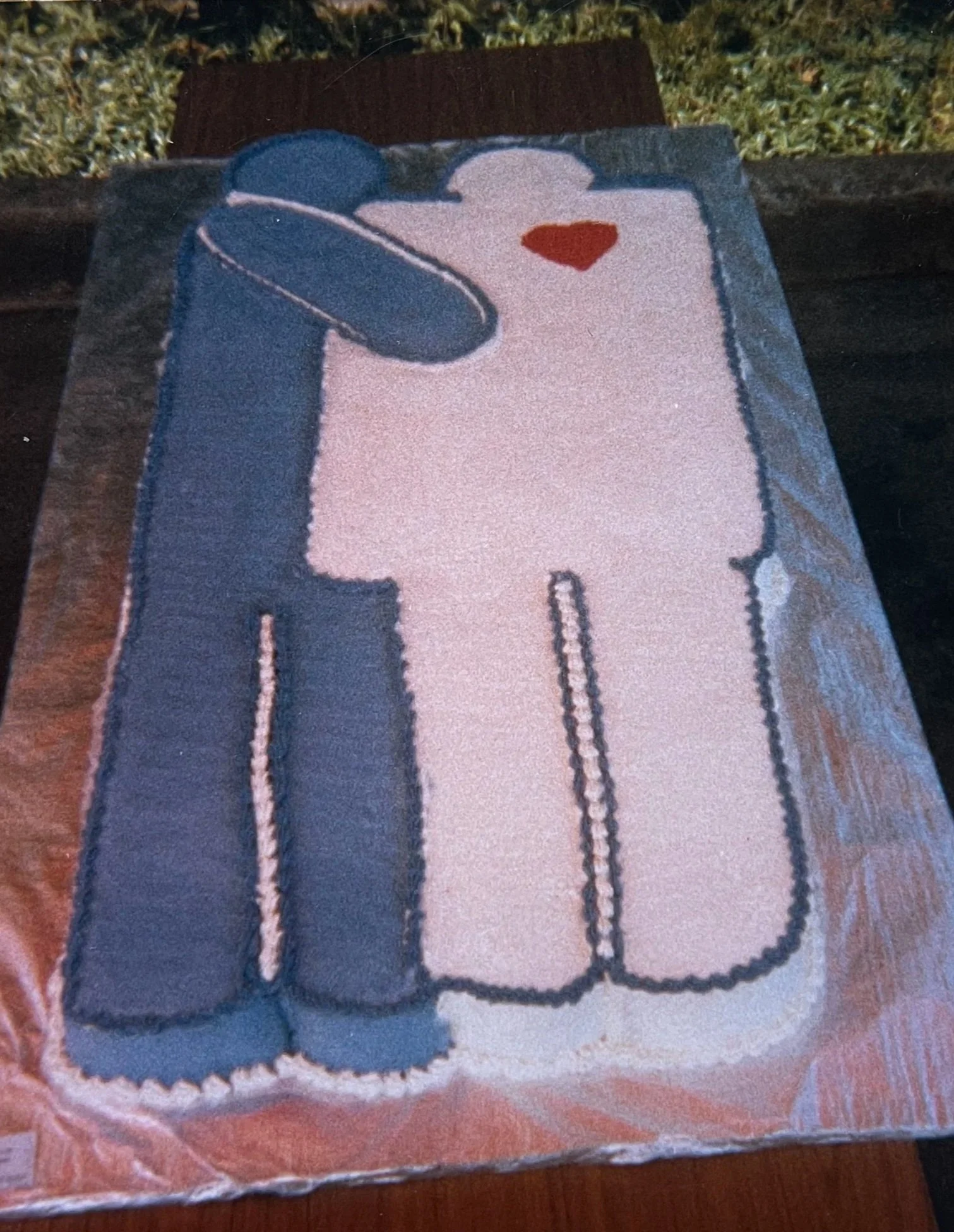
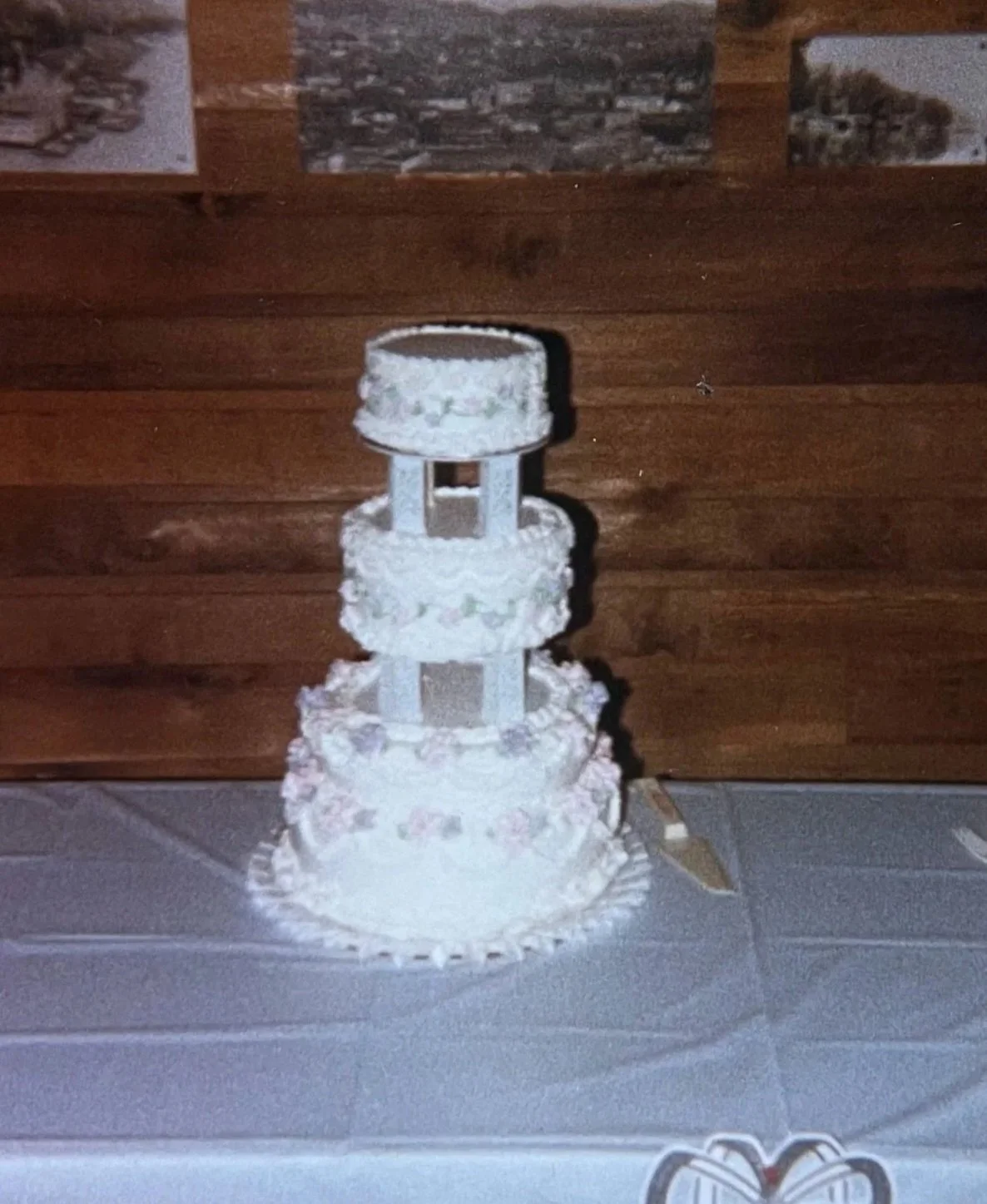
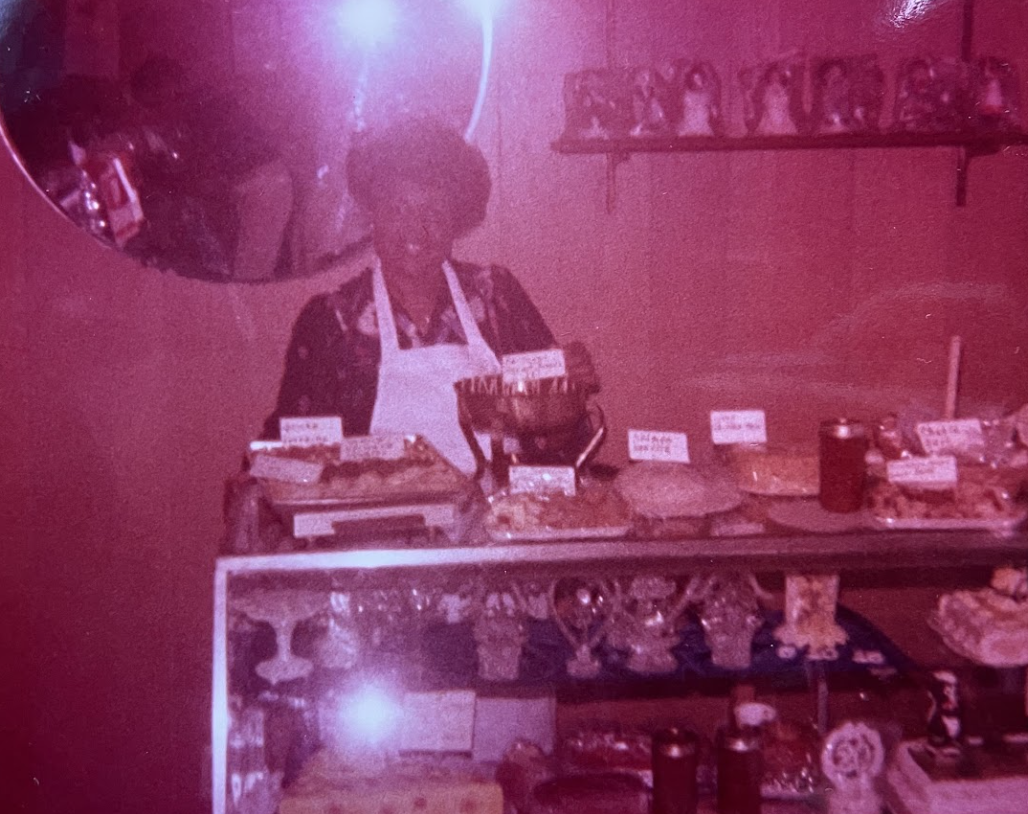
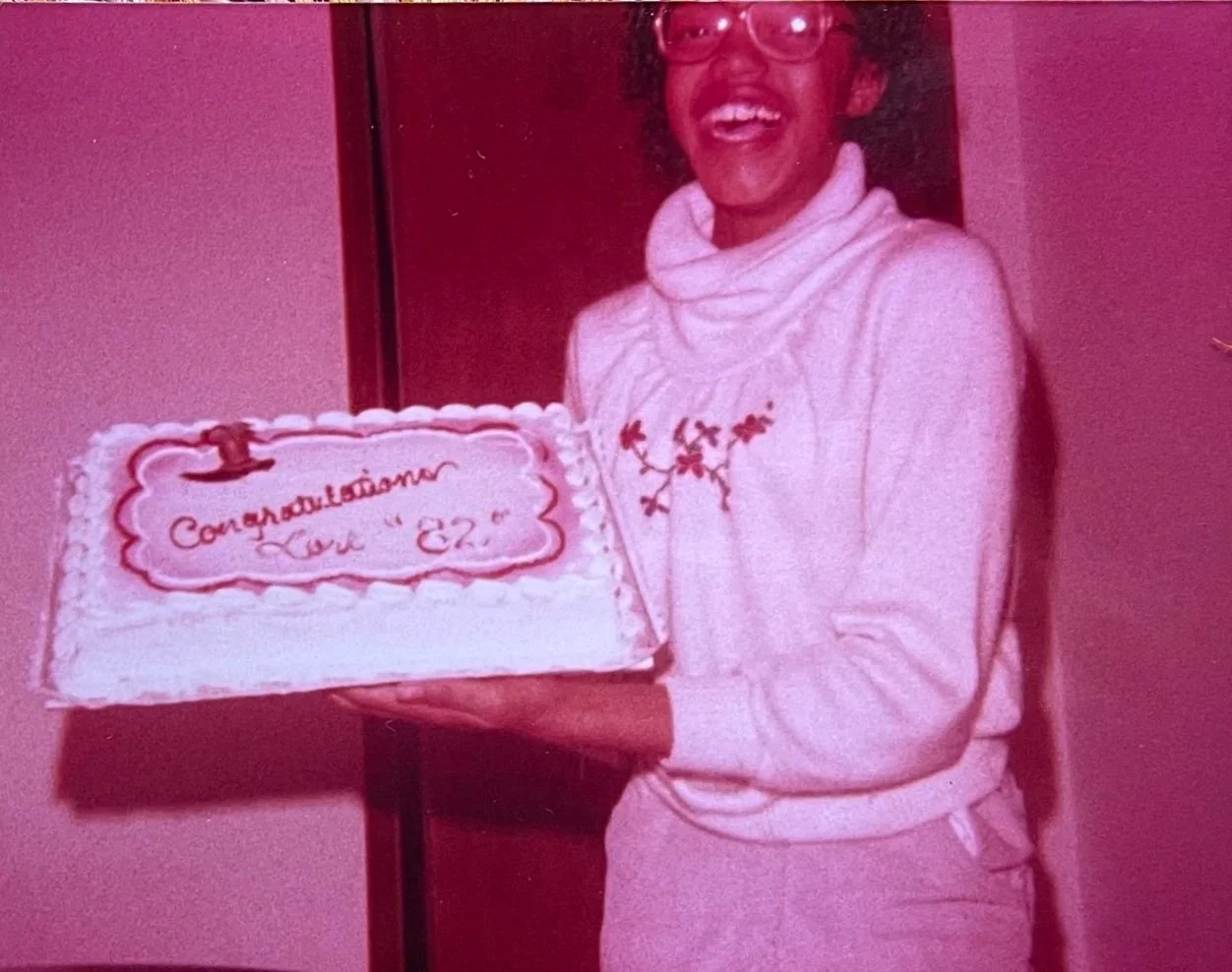
Dorothy, Lori, and a selection of cakes made by Hurtis, Images courtesy of Hadley family
The “bank robber” accusation
Dorothy and Hurtis look back on their time in Milwaukie fondly, and wish for their experience to be remembered as a positive one. But one moment of racism they recalled experiencing, warrants inclusion in this full historic record. Years into their tenure as the bakery owners, Dorothy was working the counter alone when the manager of a nearby business rushed into the Pastry Kitchen and bluntly accused Hurtis of robbing a nearby bank. Dorothy knew the suspect wasn’t her husband, but he was away shopping for bakery supplies at the time. When Hurtis returned, Dorothy told him what had happened, and he immediately walked down the street to the business to ask the man to explain why he was being accused and why this man felt comfortable intimidating his wife. After the man admitted his mistake, Hurtis replied, “Well, I guess we all look alike, don’t we?” The following day, the manager sent Dorothy a bouquet of roses as an apology, which she “promptly threw in the garbage.” The Hadley’s had a history of displaying the flowers gifted by their welcoming neighbors in the shop, but there was no place for that particular bouquet in their blossoming business.
Closing Oregon’s first Black-owned bakery
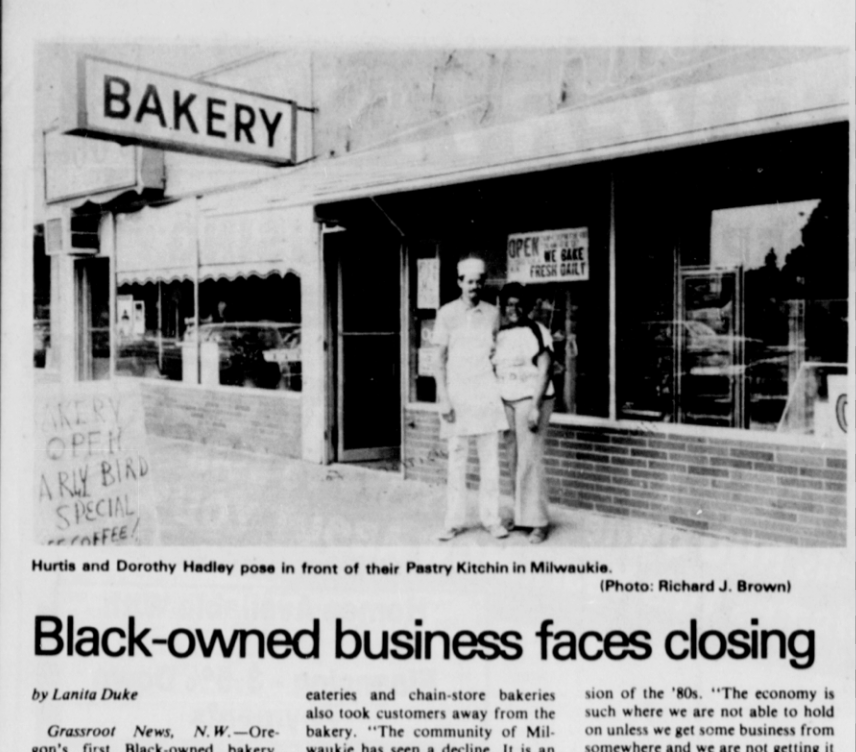
Newspaper clipping from the Portland Skanner, informing readers that the Milwaukie Pastry Kitchen was facing closure. Image courtesy of Hadley family
Dorothy and Hurtis Hadley sold baked goods on Main Street in Milwaukie for years, but in 1981 and 1983 the business received two simultaneous hits: first, the Clackamas Town Center opened, diverting most retail shopping away from Main Street, and taking their corresponding foot traffic as well; and second, their landlord raised their rent. As Milwaukie’s center of commerce moved to a newly paved shopping center, the Hadley’s and other business owners began to suffer.
Downtown Milwaukie was no longer a stopping point for commuters traveling to and from Portland and many Main Street businesses saw a sudden change in fate. In 1985, in the face of their rising rent and operating costs, the Hadley’s made the difficult decision to close the Milwaukie Pastry Kitchen for good. They sold cakes, pastries, and sweet potato pies to their customers for almost a decade, and when the business closed, the couple sold (or donated) their restaurant equipment and supplies to other small bakeries, vacated the property on Main Street, and found work elsewhere.
Life after the Milwaukie Pastry Kitchen closed
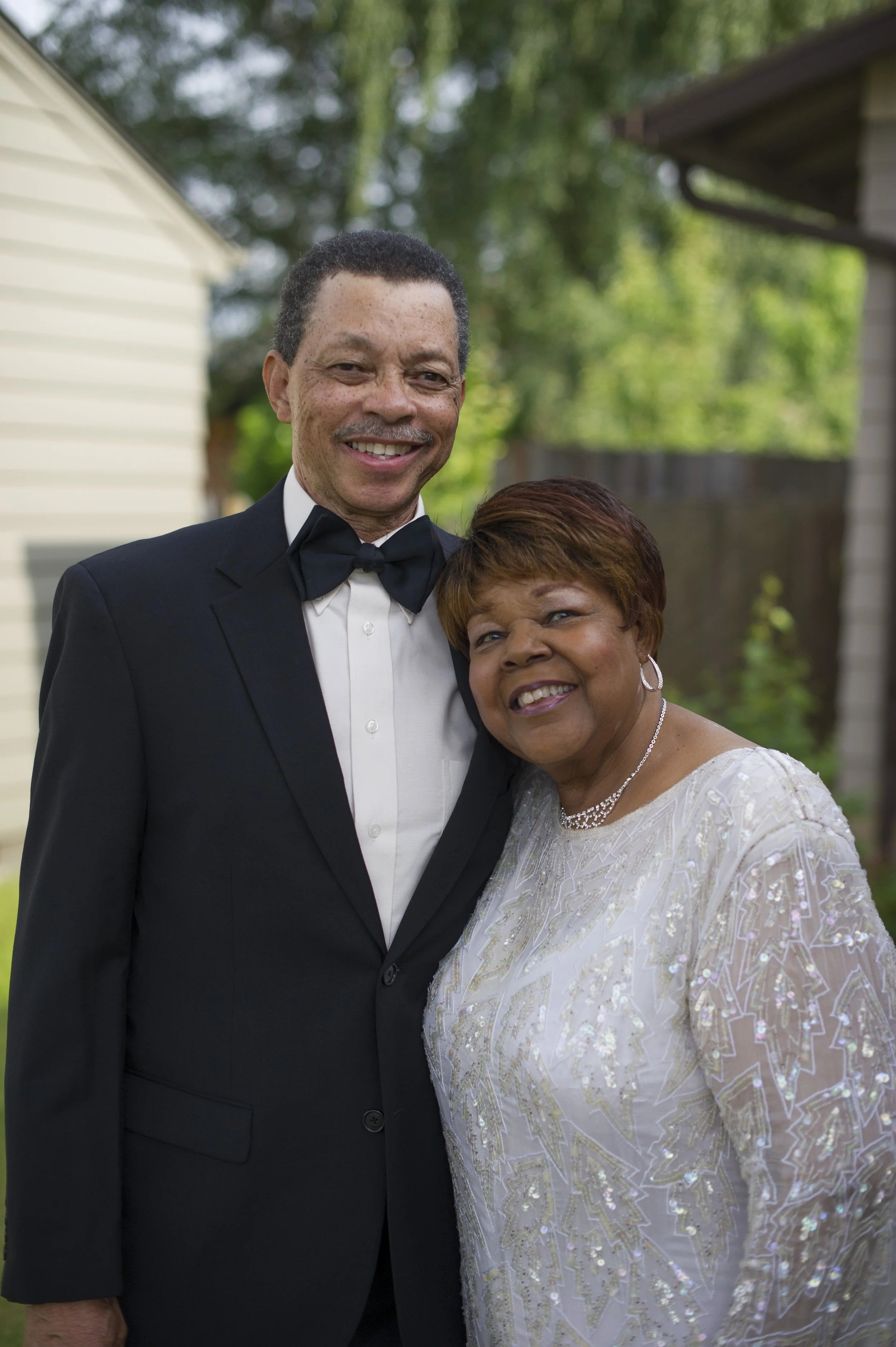
Dorothy and Hurtis Hadley celebrating their anniversary, Image courtesy of Hadley family
After closing the pastry kitchen, Hurtis continued baking. First, he accepted a position at Albertsons, then moved to Safeway, then transitioned to large-scale retail baking for Franz Bakery, before he finally settled at Oroweat, where he worked until retirement in 1997. While Hurtis finished his baking career, Dorothy would spend time working and volunteering for AmeriCorps, and produced two more Black history plays and productions with local students at Portland area schools.
In 2008, Dorothy self-published a cookbook, which is overflowing with delicious recipes, short family stories, and countless special event menus, that guide the reader through planning and decorating for every special occasion. Prior to the outbreak of the COVID, Dorothy Hadley performed jump-the-broom ceremonies and sold homemade items at craft bazaars around the Portland area. In 2022, the couple celebrated 60 years of marriage.
Although the bakery closed 31 years ago, the couple still get requests from friends and community members to bake goods for their special occasions. They decline these offers - but they accept offers to speak about their life experiences as Black Oregonians, and provide first hand testimony about their numerous historic experiences.
Retirement & Establishing a Legacy
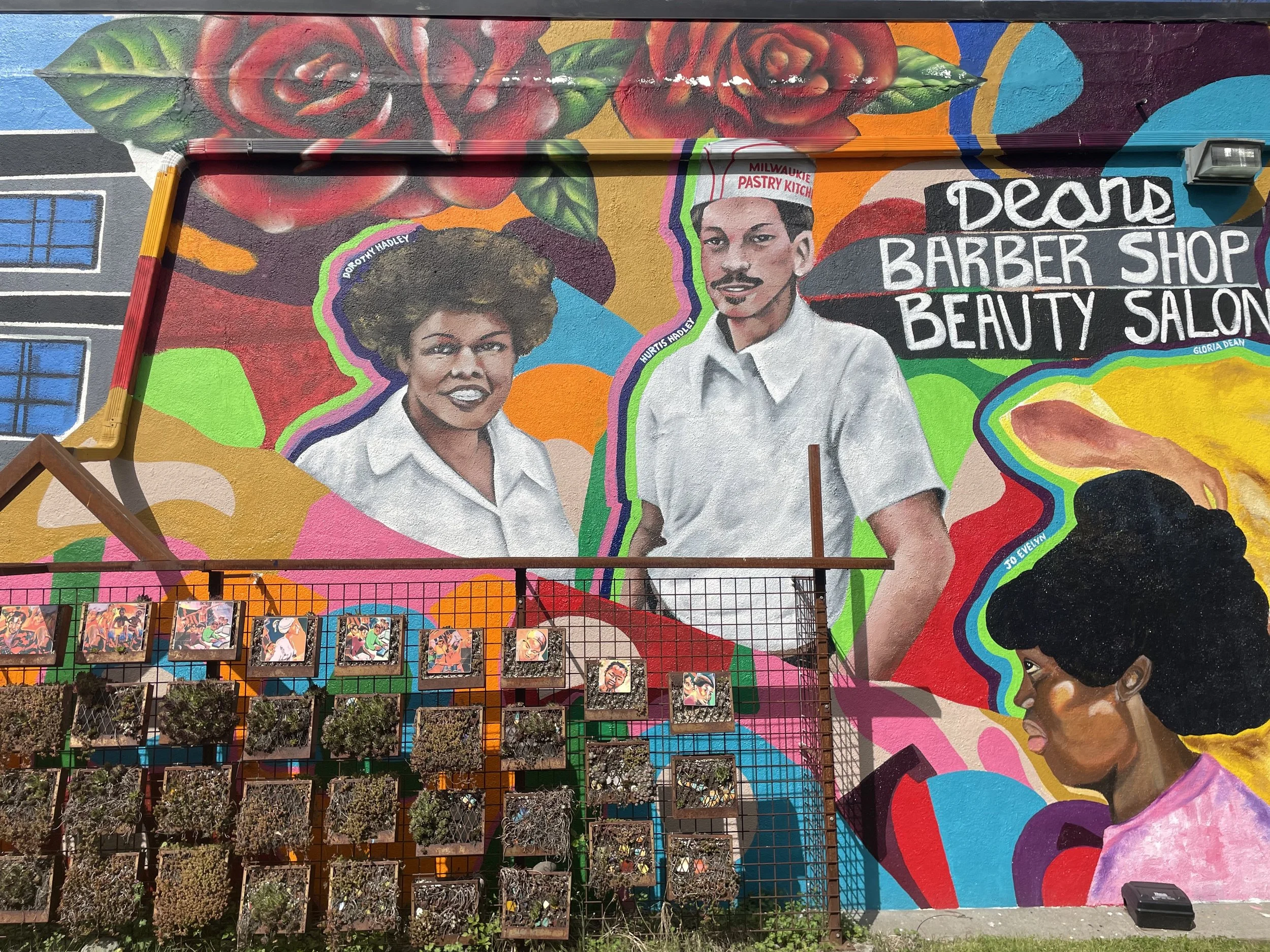
Mural painted on the side of the Micro-Enterprises of Oregon building on MLK Boulevard in Portland, Oregon. Image courtesy of Sarah Harris
The Hadley’s have been instrumental in documenting their experiences and ensuring their presence on the historic record. They have detailed their life experiences in at least four documentaries, and often accept opportunities to speak more with students and community members about their lives. In retirement, Hurtis volunteered as a docent at the Oregon Historical Society, which developed a small exhibit about the Pastry Kitchen. In 2020, the Milwaukie Museum invited the Hadley’s to speak about their lives during a Black History Month event at Milwaukie’s Ledding Library. They’ve even been captured in paint - in the Albina Community Mural, and in the Welcome to Milwaukie Mural. But prior to the establishment of this exhibit and the accompanying oral history, the Hadley’s did not have an ample archival footprint. Since the work for this project began in 2021, their standing has slowly improved, thanks to the efforts of the Hadley’s and this exhibit’s curator.
The historic achievements and existence of Black and other non-White Oregonians have long been overlooked. Racist laws and restrictions attempted to make Oregon a White-only state, yet Black and other non-White Oregonians have settled, contributed, and made history in this place for centuries - and will continue to do so.
The accomplishments of the Hadley’s are individually exceptional and also representative of national narratives. The Hadley’s were two individuals out of over five million Black Americans that moved out of the South during and after World War II; two out of the 20,000 who lost their homes when Vanport flooded; two out of tens of thousands who faced racist housing policies in 1960s Portland; two out of thousands that bussed their Black children to schools in predominantly White neighborhoods in Portland in hopes for a better education; and two out of an immeasurable sum of non-White individuals that have had an impact on the history of our state.
In Conclusion…
When Dorothy and Hurtis decided to open a business in Milwaukie, they took a massive leap of faith into a community that could have rejected them - but instead, they found support, appreciation, and admiration. Near the end of Hurtis’s oral history interview, he reflected on his life in Portland with Dorothy:
“from project kids, to high school, to being in a good profession, owning a business, raising three kids, buying a home in an area that was redlined when we bought it, and to now… where we are respected in our neighborhood, but the neighborhood has changed so much. Gentrification has really wiped out anything that was basically historic - even the community that was on Williams and Vancouver - it’s no longer the same. Unless you lived it, you don’t realize it’s not there anymore… We had different businesses, like cleaners, restaurants, grocery stores, shoe shines, all those things that we didn't really have to go outside [for] because we weren’t wanted outside [of our community].”
And while they commuted to Milwaukie daily, their homes and their lives remained rooted in NE’s Portland Albina neighborhood. Here, they cooked and ate family dinners, attended their children’s school plays, and raised their family. But they watched as gentrification disguised as urban renewal efforts physically tore apart the neighborhoods and structures that bound the Black community in NE Portland, while similarly aged structures in cities like Milwaukie remained put.
Today, you cannot visit many of the historic sites in NE Portland because they have been stripped away. You cannot visit Bop City Records, Cleo’s Tavern, and Scottie’s BBQ because the businesses no longer exist. But you can visit the shell of the Milwaukie Pastry Kitchen on Main Street in Milwaukie - which should have a marker in front of the building soon.
With or without historic structures as our guides, it is our responsibility as contemporary Oregonians to learn our history - especially our recent history - in order to create a better Oregon for all.